


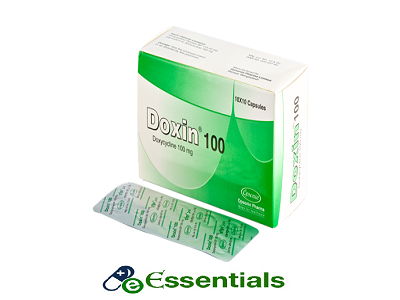

Indications : Doxycycline has a very wide spectrum of activities and has been used in the treatment of a large number of infections caused by susceptible organisms. Respiratory tract infections : Pneumonia, influenza, pharyngitis, tonsillitis, bronchitis, sinusitis, otitis media and other streptococcal and staphylococcal infections where tetracycline resistance is not a problem. Genitourinary tract infections : Pyelonephritis, cystitis, urethritis, gonorrhea, epididymitis, syphilis, chancroid and granuloma inguinale. Chlamydia : Lymphogranuloma venereum, psittacosis, trachoma. Intestinal diseases: Whipples disease, tropical sprue, blind loop syndrome. In acute intestinal amoebiasis : Doxycycline may be a useful adjunct to amoebicides. Bacillary infections: Brucellosis, tularemia, cholera, travelers diarrhea Acne : Acne vulgaris, acne conglobata and other forms of acne. Other infections : Actinomycosis, yaws, relapsing fever, leptospirosis, typhus, rickettsial pox and Q fever, Cellulitis furunculosis, abscess and infections caused by Mycobacterium marinum, Bordetella pertussis and Bacillus anthracis. Therapeutic Class : Tetracycline Group of drugs Pharmacology : Doxycycline inhibits bacterial protein synthesis by binding to the 30S ribosomal subunit. It has bacteriostatic activity against a broad range of gm ve and gm-ve bacteria. Dosage & Administration : Oral- Susceptible infections: 200 mg on day 1 as a single or in divided doses, followed by 100 mg once daily. Severe infections: Maintain initial dose throughout the course of treatment. Relapsing fever and louse-borne typhus: 100 or 200 mg as a single dose. Prophylaxis of scrub typhus: 200 mg as a single dose. Uncomplicated gonorrhoea: 100 mg bid for 7 days or a single dose of 300 mg followed by a 2nd similar dose 1 hr later. Syphilis: 100-200 mg bid for at least 14 days. Acne: 50 mg daily for 6-12 wk. Chloroquine resistant falciparum malaria acute attack: 200 mg daily for at least 7 days, w/ or after treatment w/ quinine. Treatment and postexposure prophylaxis of inhalation anthrax: 100 mg bid, to complete a 60-day course after treatment w/ 1-2 other antibacterials. Prophylaxis of chloroquine-resistant malaria: 100 mg daily for up to 2 yr. Topical/Cutaneous- Periodontitis: As 10% controlled-release subgingival preparation: Inject the contents of the syringe into the periodontal pocket, may be repeated 4 mth after initial treatment. Intravenous- Susceptible infections: 200 mg on day 1 followed by 100-200 mg daily depending on the severity of infection. Interaction : Should not be taken with antacids, milk, other alkalis e.g. calcium, magnesium and iron, penicillin, anticoagulants, anti-diabetic agents, anticonvulsants and enzyme inducing drugs Contraindications : Hypersensitivity to doxycycline and any of the tetracyclines. Concurrent use with methoxyflurane. Lactation Side Effects : Gastrointestinal disterbances,eg. anorexia, vomiting, dysentry etc. overgrowth of resistant organisms may cause Glossitis, Stomatitis, or Staphylococcal enterocolitis; Apart from these skin rashes, purpura may occur. Photosensitivity and dermatological reactions are rare. Pregnancy & Lactation : Pregnancy: Doxycycline should be avoided in pregnant women, because of the risk of both staining and effect on bone growth in the fetus. Lactation: Doxycyclines enter breast milk, and mothers taking these drugs should not breastfeed their child. Precautions : During development of teeth (last trimester of pregnency, upto 12 yrs of age) the use of tetracyclines may lead to discoloration of teeth. So tetracyclines should not be administered during these periods Use in Special Population : Neonates and children: Doxycycline may cause permanent discoloration of the teeth and so is contraindicated for neonates and children under 12 years. Elderly: No special precautions are necessary in the elderly. Storage Conditions : It should be stored in a dry place at room temperature.
Related products